Should you tile walls or floors first?
Summary from this article...
The order can affect the finished result.
If you’re tiling a room from scratch, one of the first practical questions is whether the walls or floor should be tiled first.
In most situations, walls are tiled before the floor. However, the best approach depends on the room, the tile layout and how the installation is being completed.
Why are walls usually tiled first?
It protects the finished floor.
Installing wall tiles first means there’s less risk of damaging a newly tiled floor while working around the room.
It also allows the floor tiles to create a clean finish beneath the wall tiles, helping achieve consistent lines and a neat transition.
What about the bathroom?
Planning matters around every fixture.
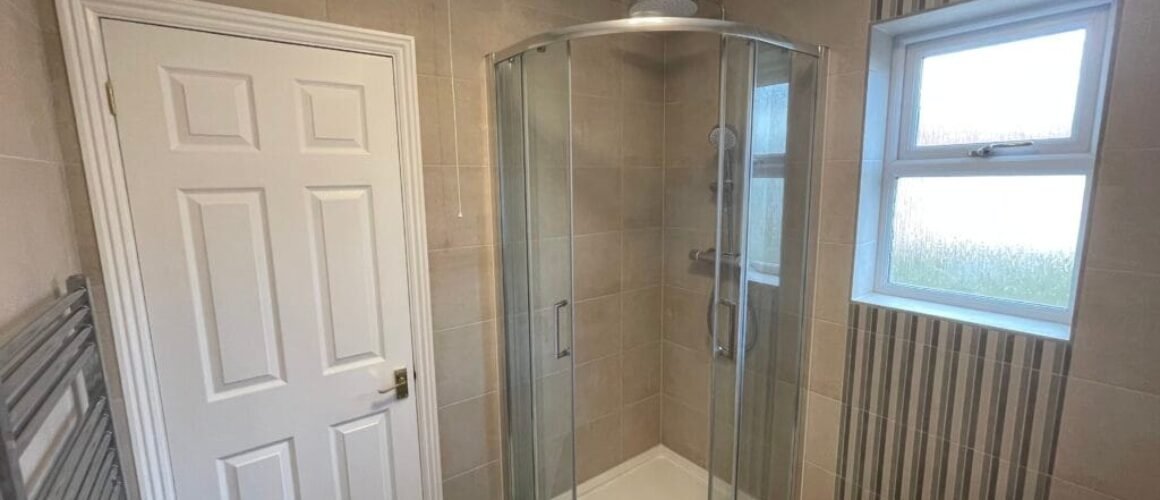
Bathrooms often involve toilets, basins, baths, showers and other fittings, making accurate setting out particularly important.
Wall tiles are generally installed first, followed by the floor. Once the floor has been completed and cured appropriately, the remaining installation and finishing work can continue.
What about floor tiles first?
Sometimes the situation calls for a different approach.
There are projects where floor tiles may be installed first. The decision can depend on the room layout, tile format, access and the desired finish.
For example, a particular design may require the floor to establish the main reference line for the rest of the installation.
The important thing is to plan the complete layout before starting.
What if I’m using large-format tiles?
Accuracy becomes even more important.
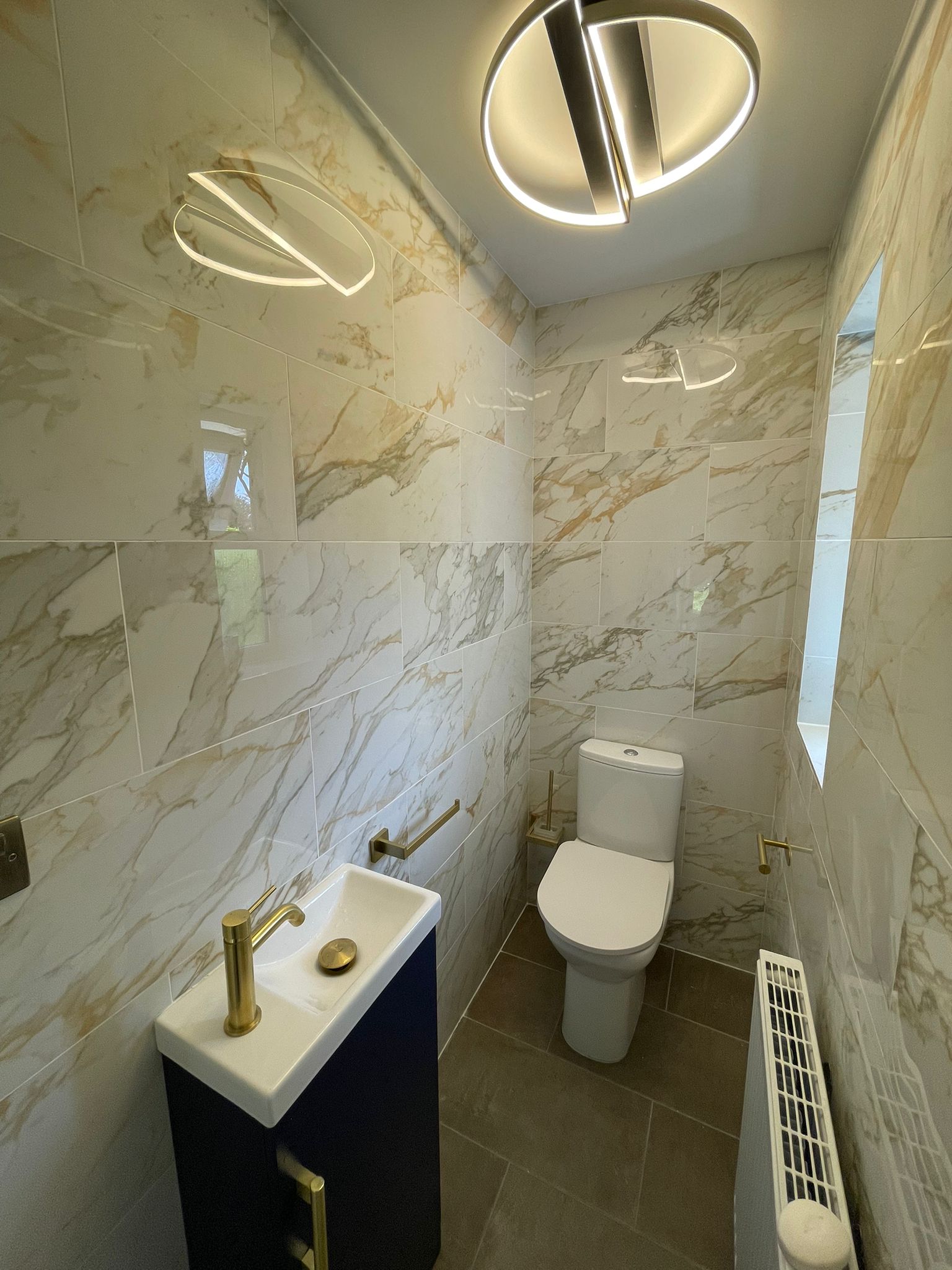
Large-format tiles can create a beautifully clean appearance, but they leave less room for errors.
Walls and floors need to be prepared properly, reference points need to be accurate and the finished layout should be considered before the first tile is fixed.
A good installation starts with planning, not adhesive.
What about the tile layout?
The pattern can influence the order.
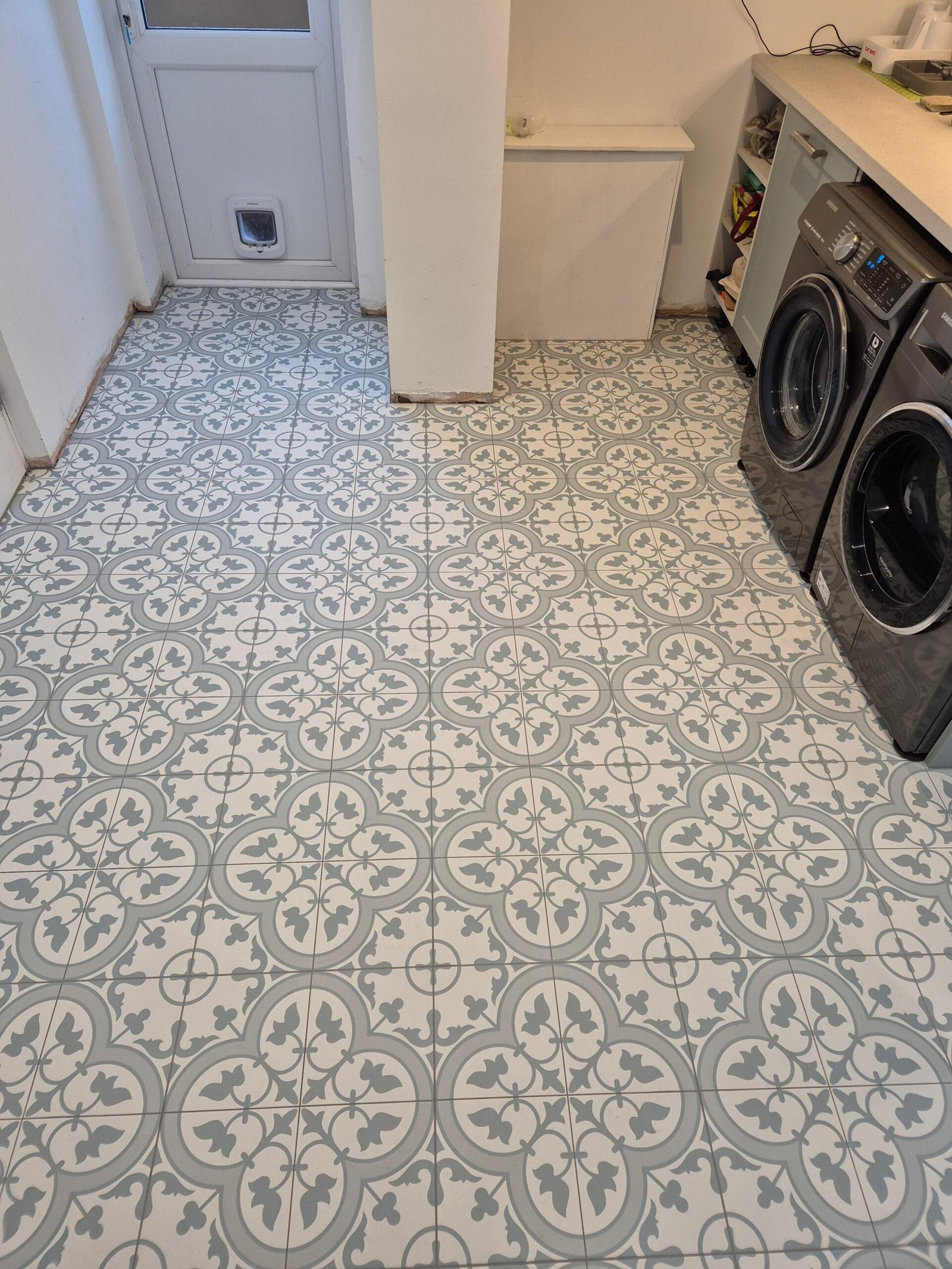
Straight layouts are relatively straightforward, while herringbone, brick bond and other patterns require more careful setting out.
The position of grout lines, corners, windows, doors and fixtures should all be considered before installation begins.
This is particularly important when tiles continue from walls onto floors.
Does the order really matter?
The preparation matters more than the rule.
There isn’t one rule that applies to every room.
What matters is creating a stable, properly prepared surface and planning the installation so that each stage supports the next.
A professional tiler will consider the whole room before deciding where to begin.
A simple rule of thumb
Plan first. Tile second.
For many standard installations:
1. Prepare the surfaces
2. Set out the tile layout
3. Install the wall tiles
4. Install the floor tiles
5. Complete grout and finishing
The exact sequence may change depending on the project.
Planning a tiling project?
Get the layout right from the start.
Whether you’re tiling a bathroom, kitchen, floor or wall, careful preparation makes a noticeable difference to the finished result.