Do I Need a Professional Tiler or Can I DIY? Pros, Cons & Hidden Costs
Pros, Cons & the Hidden Costs You Should Know
When planning a tiling project, many homeowners face the same question: Should I do it myself, or hire a professional tiler? On the surface, DIY tiling can look like an easy way to save money. In reality, the answer often depends on the space, the materials, and how much risk you’re prepared to take on.
This guide breaks down the real pros, cons, and hidden costs of both options, so you can make a confident, informed decision — not one based on guesswork.
When DIY Tiling Can Make Sense
DIY tiling isn’t always a bad idea. In the right setting, it can be a rewarding project.
Pros of DIY Tiling
-
Lower upfront cost – No labour fees
-
Flexible timing – Work at your own pace
-
Satisfying result – Especially for small projects
-
Good for simple areas – Straight walls, small splashbacks, utility rooms
If you’re tiling a small, low-risk area with standard ceramic tiles and minimal cutting, DIY may be perfectly reasonable.
But this is where many projects start to unravel.
The Hidden Costs of DIY Tiling (That Rarely Get Mentioned)
DIY tiling often costs more than expected — just not always in obvious ways.
Common Hidden Expenses
-
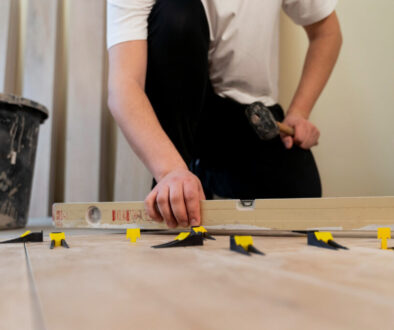
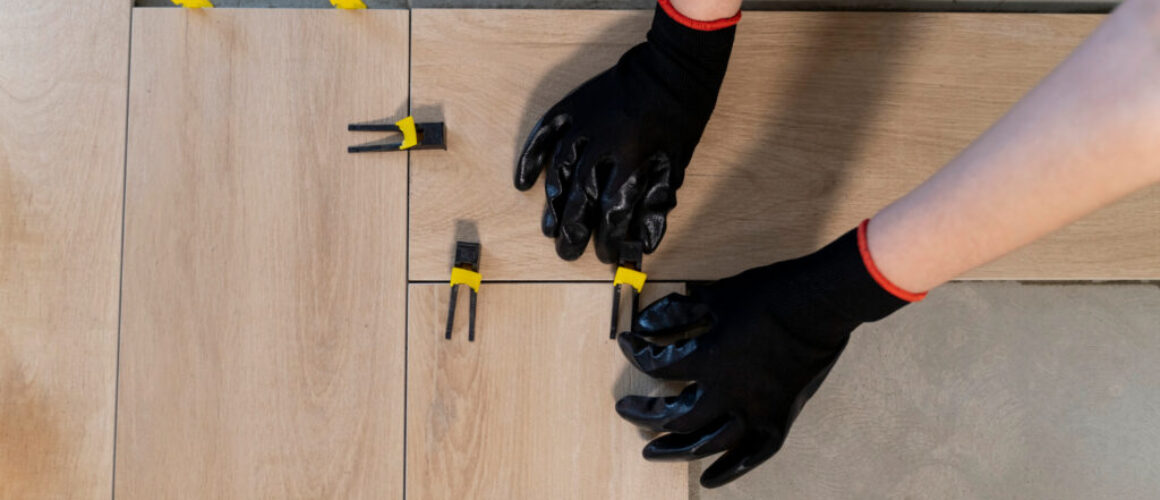
Tile cutters, spacers, levelling systems
-
Adhesives and grout (often bought twice due to mistakes)
-
Waterproofing materials for bathrooms
-
Waste from incorrect cuts or cracked tiles
-
Repairs if tiles fail or lift later
And then there’s the biggest cost of all: time.
What looks like a weekend job can quickly turn into weeks of frustration, especially when working around corners, pipework, uneven walls, or floors that aren’t level.
Where DIY Tiling Often Goes Wrong
Some areas are simply not forgiving.
High-Risk DIY Areas
-
Bathrooms and wet rooms
-
Underfloor heating systems
-
Large-format tiles
-
Natural stone tiles
-
Uneven floors or older properties
Mistakes in these spaces don’t just affect appearance. They can lead to water damage, cracked tiles, mould, or complete failure, often requiring the job to be stripped out and redone.
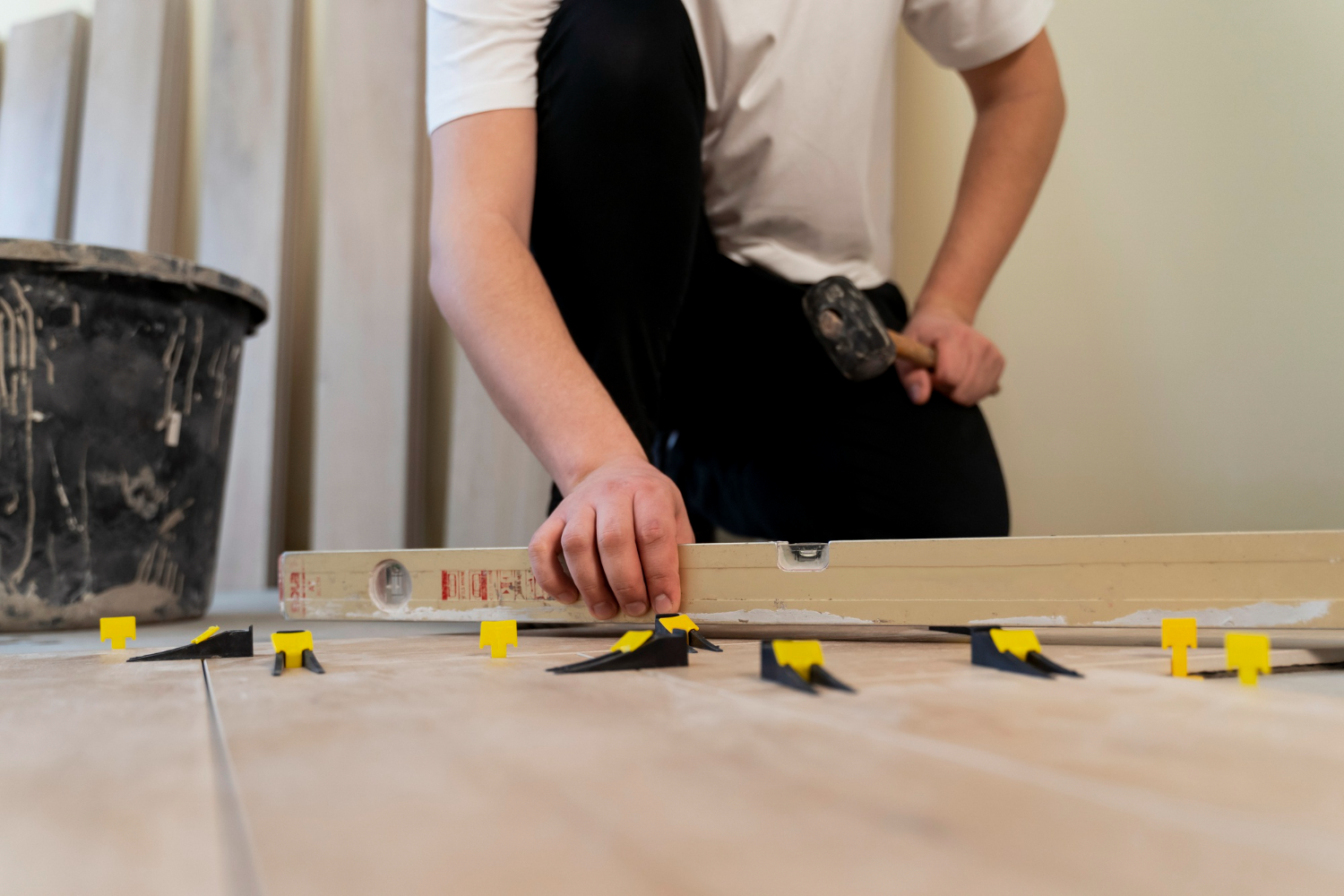
Cost Comparison: DIY vs Professional Tiling
At first glance:
-
DIY looks cheaper
-
Professional tiling looks expensive
But when you factor in:
-
Tools
-
Wasted materials
-
Time
-
Potential repairs
The gap narrows quickly.
In many cases, professional tiling ends up being better value over time, especially for bathrooms, kitchens, and floors that see daily use.
A Practical Rule of Thumb
DIY tiling may suit you if:
-
The area is small and dry
-
The tiles are simple
-
You’re confident with tools
-
You’re happy to accept imperfections
Professional tiling is usually the better option if:
-
The room involves water
-
Tiles are large or premium
-
The surface needs preparation
-
You want a long-lasting finish
DIY tiling isn’t about whether you can do it — it’s about whether you should. For some projects, it’s a cost-effective choice. For others, it’s a false economy that leads to frustration and added expense.
Understanding the pros, cons, and hidden costs upfront helps you choose the right route for your home, your budget, and your peace of mind.